


Aleksi Ehtee sets out the investment case and sustainability benefits of investing in timberland, based on his experiences with the Church Commissioners for England
Although timberland emerged as an institutional asset class over three decades ago, its appeal has recently accelerated as investors seek stronger portfolio diversification. According to a survey by investment manager Nuveen, 11% of alternative investors were looking to increase their allocation to timberland in 2025, a trend underscored by high-profile, first-time commitments from pension funds such as Nest.
That timberland is becoming more popular in portfolios should not be surprising when considered from a risk-return perspective. The asset class enjoys a low correlation with stocks, bonds and even other real assets, while timber price appreciation tends to track inflation. Timberland also benefits from a track record of resilience over decades and is relatively insulated from wider financial market conditions and short-term changes in policy.

Central to the investment thesis are timberland’s compelling supply-demand dynamics, which are expected to strengthen over time. Growth in global GDP and the critical need to decarbonise brings with it a structural increase in the consumption of wood products, with the World Bank estimating that timber demand could quadruple by 2050. This is set against a relatively inelastic supply of timber – it is not expected to scale at the same pace – partly because trees suitable for products such as sawn wood and wood pulp take time to mature. Combined, this should support sustained timber price growth.
Sustainable sources
Not only has demand for quantity increased, but demand for quality, too. Perhaps the greatest difference in timber production now compared to say, 30 years ago, is that end users want to know their wood products are sustainably sourced, typically through third-party certification.
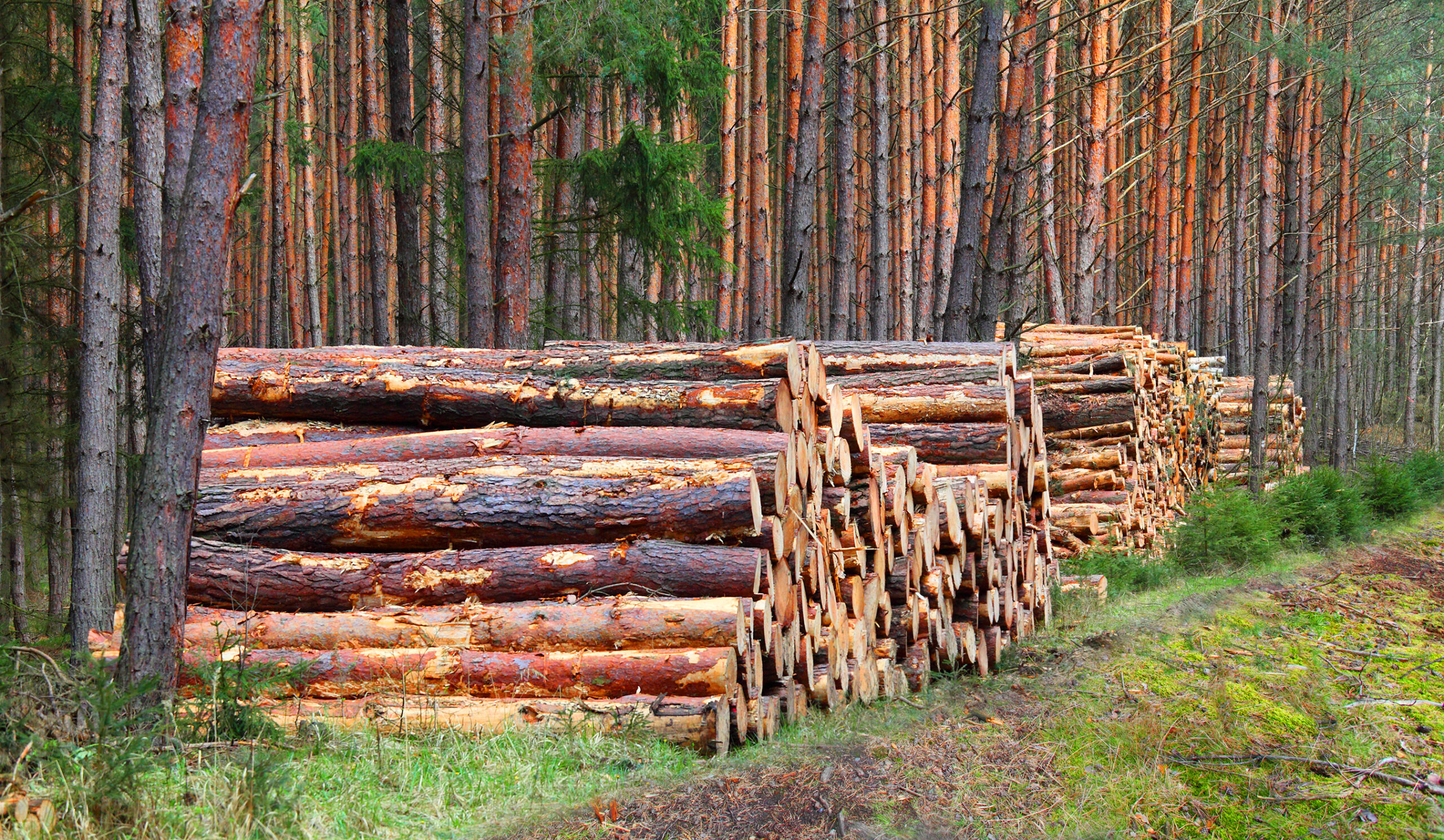
One of the biggest misconceptions about our sector is that cutting down trees is an inherently destructive process, no doubt due to the legacy of (thankfully declining) global deforestation. But, when sustainably managed at the landscape scale, the harvesting and replanting of trees can ensure a continuous source of renewable resource production, with wood products acting as long-term stores of carbon, replacing plastic in packaging and concrete or steel in construction.
Across our exposure to timberland, every site is managed according to local best management practices, even if it did not enter our portfolio that way. All wood harvested is similarly certified as sustainable – for example, through the Forest Stewardship Council (FSC) scheme in the UK. Sustainably certified wood is now growing in popularity as an alternative to carbon-intensive materials – not only is demand for certified wood higher, but it can also command premium pricing.
But what really sets timberland apart from other real asset classes is its ability to offer investors significant inter-portfolio decarbonisation benefits without compromising financial returns. Our timberland investments provide the Church Commissioners for England with the single greatest source of sequestration within our real assets portfolio, removing 415,000 tCO2e in 2024.
Institutional Investment Conferences & Summits from Longview Networks
As an endowment fund with a fiduciary duty to deliver financial returns to support the mission of the Church of England while generating positive outcomes for society, timberland is a particularly good fit for our portfolio.
To put this another way, our core returns from timberland derive from the harvesting of wood. The secondary benefits, both environmental and social, are products of good stewardship. Ownership of timberland also presents value-add opportunities in the form of renewable energy generation, woodland creation, and carbon or environmental credit generation, all of which promote positive environmental outcomes.
Within our portfolio, we have already entered lease and development agreements for operational wind turbines that power the equivalent of 125,000 homes. In Georgia, US, we have joined forces with a local mitigation bank developer for environmental improvement projects that can be sold as offsets for development elsewhere, similar to Biodiversity Net Gain in the UK.
Though some investors will prefer a hands-off allocation to this asset class, direct ownership provides the Church Commissioners with greater active management capabilities across its 85,000-acre portfolio. This includes control over strategic decisions and the ability to defer harvesting to hold timber on the stump until there are greater signals to sell.
But those looking to invest in forestry directly must make careful decisions on where to invest. Our own holdings are concentrated in the UK and the US, in areas with low climate risk and a history of institutional-grade liquidity. Most trees in the portfolio are coniferous species, which grow quickly, sequester carbon at scale, and are well-suited for construction.
Regardless of how institutions choose to invest – whether through fund investments, joint ventures or directly – an allocation to timberland can pay dividends, both financially and environmentally, providing diversification benefits while making a significant contribution to ESG targets.
Aleksi Ehtee is the head of timberland at the Church Commissioners for England