
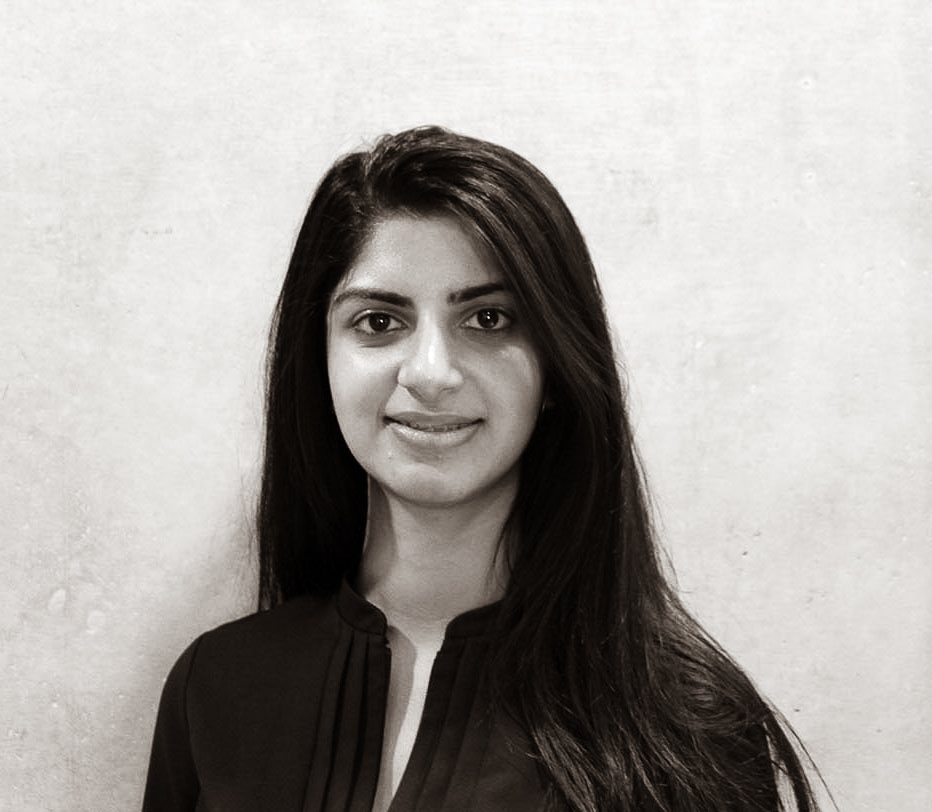

Better Society Capital’s Aman Johal speaks to PMP about how social outcomes partnerships create real-world impacts and why the government’s new Better Futures Fund will reenergise the sector
Better Society Capital was set up nearly 15 years ago to grow the UK social investment market. The social investment organisation is both an investor in funds and a market builder, engaging with other investors to tackle social issues and inequalities in the UK.
In 2011, Better Society Capital received £200m from the UK’s four largest banks – Barclays, HSBC, Lloyds and NatWest – alongside £400m from the government using money reclaimed from dormant bank accounts. It is self-sustaining as it seeks to earn a return and maintain its capital.

Aman Johal is a managing director of Better Society Capital and leads one of its four main business areas, social outcomes partnerships.
Talk me through the purpose of Better Society Capital
Aman Johal: We were set up to bring the commercial investment system closer to the social impact sector. We look at investments through three lenses – financial, impact and systems change. Philanthropy and government grants obviously still have a huge role in social impact, but we talk to government, the social sector and many other parts of the financial system to channel investment into socially impactful initiatives.
I focus on social outcomes partnerships but we also invest across three other main areas – venture, property and social lending to charities and social enterprises.
How do you attract external capital?
Johal: We are a wholesale investor into funds and we engage with a broad range of investors to raise awareness of the potential investment solutions in the UK that are also solving for impact. Investors will usually co-invest with us into funds. We invest on the same terms as our co-investors, so we do not provide any de-risking or concessionary capital. We’re looking to create impact and do a whole host of broad engagement activity to raise awareness of investment solutions that are effectively working to support people in the UK.
We have a team dedicated to engaging with investors across a wide range of activities. We talk to many investors, from LGPS funds, other pension funds, trusts and foundations to high-net-worth individuals, international institutions and insurance companies. In particular, we’re seeing strong interest from LGPS funds as local, place-based investment is top-of-mind for many of them.
How do social outcome partnerships work? And how are they investable for institutional investors?
Johal: They involve government contracts commissioned around the delivery of services to individuals with complex needs, such as the homeless, children needing care or people with long-term health conditions.
Social investors like us provide upfront working capital to the delivery organisations, usually social enterprises and charities, that deliver on these contracts. As these organisations are only paid after outcomes have been achieved, there is a payment gap. Social investors provide working capital and are repaid once the outcomes have been achieved. Social investors are primarily interested in the deep-impact issues involved.
Our investors are attracted by three attributes. They can very clearly articulate, in a highly evidenced way, the impact their capital has made. They really like the place-based investment angle. And, from a portfolio construction perspective, non-correlated returns help to diversify their portfolios.
Have social outcomes partnership investments established a robust track record?
Johal: Partnerships have been running since 2011, and the concept has been around even longer. The previous Labour government, the last Tory government and now the new Labour government have all supported it – so the mechanism has cross-party support.
The sector is now at a positive inflection point, with the government making a huge commitment to its future. It just announced a huge commissioning budget for its Better Futures Fund, which will grow the market significantly over the next decade, up to potentially £1 billion of contracts.
The UK was a pioneer and remains global leader – there have now been 100 contracts. The model has been adopted by over 40 other countries.
Other political parties may have different priorities. Is there any political risk?
Johal: At its core, partnerships are essentially trying to deliver better outcomes for individuals with complex issues at better value to government. And that’s what the evidence shows. For every £1 the government has spent, a further £9 of public value has been created. Any government that tries to address these issues faces a burden on the public purse – and there’s cross-party interest in alleviating this burden.
Can you provide any examples of successful contracts?
Johal: A great example is the Greater Manchester Better Outcomes Partnership, which brings together mission-led organisations to support young people at risk of homelessness before they reach crisis point. Through its four-year Pathfinder programme, it has already helped almost 1,000 young people secure or stabilise their accommodation and then address their wider needs like mental health, financial stability and engagement in education or employment.
The approach builds confidence and resilience which in turn prevents longer term homelessness and supports those young people to lead independent, fulfilling lives. By using the SOPs model, the GMBOP can focus on long-term outcomes rather than short-term outputs, delivering £5.9 million of outcomes so far with support from investors like GMCA and DCMS.
What is the risk-return profile of social outcomes contracts? Have there have been examples of the government deciding an outcome hasn’t been achieved and refusing to pay out?
Johal: Technically, it is a risk. If an outcome is not achieved, the government will not pay – that is how the government manages its risk. Performance is managed in a cohesive, data-driven way, with a high evidence bar before payments are triggered.
However, there has been very little failure in the market, as contracts are actively managed and appropriately flexible. Projects create a lot of data on an ongoing basis that stakeholders can review. The ability to flex and tweak provision is useful when dealing with complex individuals – that’s why it works and is therefore of interest to investors.
Are risk-adjusted returns comparable to non-impact investments? And are they comparable with corporate pension schemes’ fiduciary duty?
Johal: Different investors have different ranges for returns and risk. The risk-adjusted returns have been sufficient to unlock a wide range of investors so far. The largest driver is impact – but returns must be appropriate to unlock pools of capital. Fiduciary duty is obviously important.
What is the government hoping to achieve with the Better Futures Fund? To what extent can this sector continue to increase in scale?
Johal: The government announced a £500 million payment-matching commissioning pot for local authorities and other outcome payers, which will potentially grow to £1 billion of outcomes contracts. It’s building on the previous success of outcomes contracts to help vulnerable children and their families.
The government acknowledges that the wider determinants of issues for vulnerable children include health, housing and other areas. This model can build on its track record of success in new areas. That said, the government is still working through the final details of how it will be implemented. It’s been announced for the next budget period so the earliest it can be launched is spring next year.
What is the potential scope of this model? To what extent could it spread through other areas of government spending?
Johal: There’s definitely scope for growth. We’ve seen it work really well for complex issues that require flexible, tailored delivery. The government is also very interested in the fact its highly evidenced, so it only pays on the successful achievement of outcomes. The first hundred contracts has given the Government conviction in the model. We’re seeing interest in this mechanism across departments – and the Treasury is also interested in it from a budgeting perspective.
How is this model gaining traction around the world?
Johal: We only operate in the UK but regularly get approached by people in other countries looking to replicate our model, as the UK pioneered it and is seen as the global leader. A few international investors have even invested in the UK so they can learn from our model and export it back to their country. We also now look to practice in other countries – and learn from them too.
What plans do you have for the future?
Johal: We’ve been involved in social outcomes partnerships since our inception – so we’ve been instrumental to its growth and are highly committed to its future. We’re focused on helping to make the Better Futures Fund a success with the appropriate amount and type of investment capital. The huge commitment is very encouraging. It’s a very exciting moment for the government, investors and delivery partners – but most importantly an exciting opportunity to help those that need it most.