Institutional investors seeking resilient, future-focused portfolios are increasingly turning to timberland – a real asset that combines climate resilience, biodiversity benefits, and long-term value creation. By Thomas Sarno Global Head of Timberland Investments
With more than 40 years of global experience, Manulife Investment Management has delivered competitive returns while monetising ecosystem services through carbon and renewable energy projects, mitigation banking and conservation. Timberland has consistently outperformed traditional assets on a risk-adjusted basis [1] (Sharpe ratio: timberland 0.86 vs. S&P 500 0.5 and commercial real estate 0.59), underscoring its strength across market cycles.[2]
Why timberland now?
As climate and biodiversity pressures reshape the global economy, timberland has become an essential platform for both climate action and portfolio diversification. Although timberland investments involve certain commodity, environmental and regulatory risks, the asset class can offer steady income, diversification, and inflation protection, while also benefiting from new tailwinds such as decarbonisation and growing demand for nature‑based solutions.
Effective management can generate additional alpha by monetising ecosystem services – including carbon sequestration, renewable energy integration, mitigation banking, and conservation. These opportunities are expanding as regulatory frameworks evolve: conservation funding, land‑use requirements and emerging carbon markets are increasing both the investable universe and long-term value.
Non‑timber revenue streams continue to scale, reaching 19% of US total revenue (up from 8.6% in 2017). New programmes such as pine straw raking and biochar production provide scalable long-term income streams, while expanded recreation licensing contributed $2.7 million in new revenue.[3]
Regenerative returns: expanding natural capital value
Timberland’s true potential lies in how forests are managed. At Manulife Investment Management, our integrated stewardship model and Value-Added Services platform transform forests into dynamic systems that generate value beyond traditional production. By monetising ecosystem services, we unlock new revenue streams while improving ecological health and enhancing portfolio resilience.
We unlock new revenue streams while improving ecological health and enhancing portfolio resilience.
The case studies below demonstrate how these strategies can deliver measurable, scalable outcomes for both investors and the environment.
CASE STUDY 1: Scaling timberland for climate impact
Issue: Institutional investors are seeking assets that can generate strong returns while accelerating climate-positive outcomes. Achieving both requires large, ecologically diverse forests capable of supporting sustainable production and high-quality natural capital projects.
Action: Manulife Investment Management acquired and manages a significant, hardwood-rich timberland portfolio to strengthen biodiversity and productivity. The team initiated three American Carbon Registry Improved forest management 2.1 carbon projects, expected to generate ~6 million removal- based credits over 20 years, positioning clients to benefit from both voluntary and emerging compliance market demand.
Outcomes
• Financial: Long-dated carbon credit generation supports diversified income and enhances portfolio resilience.
• Environmental: Integrates sustainable timber operations with forward-looking carbon strategies that advance climate and biodiversity goals.
• Strategic: Demonstrates leadership in large-scale, high- integrity carbon development across timberland assets.
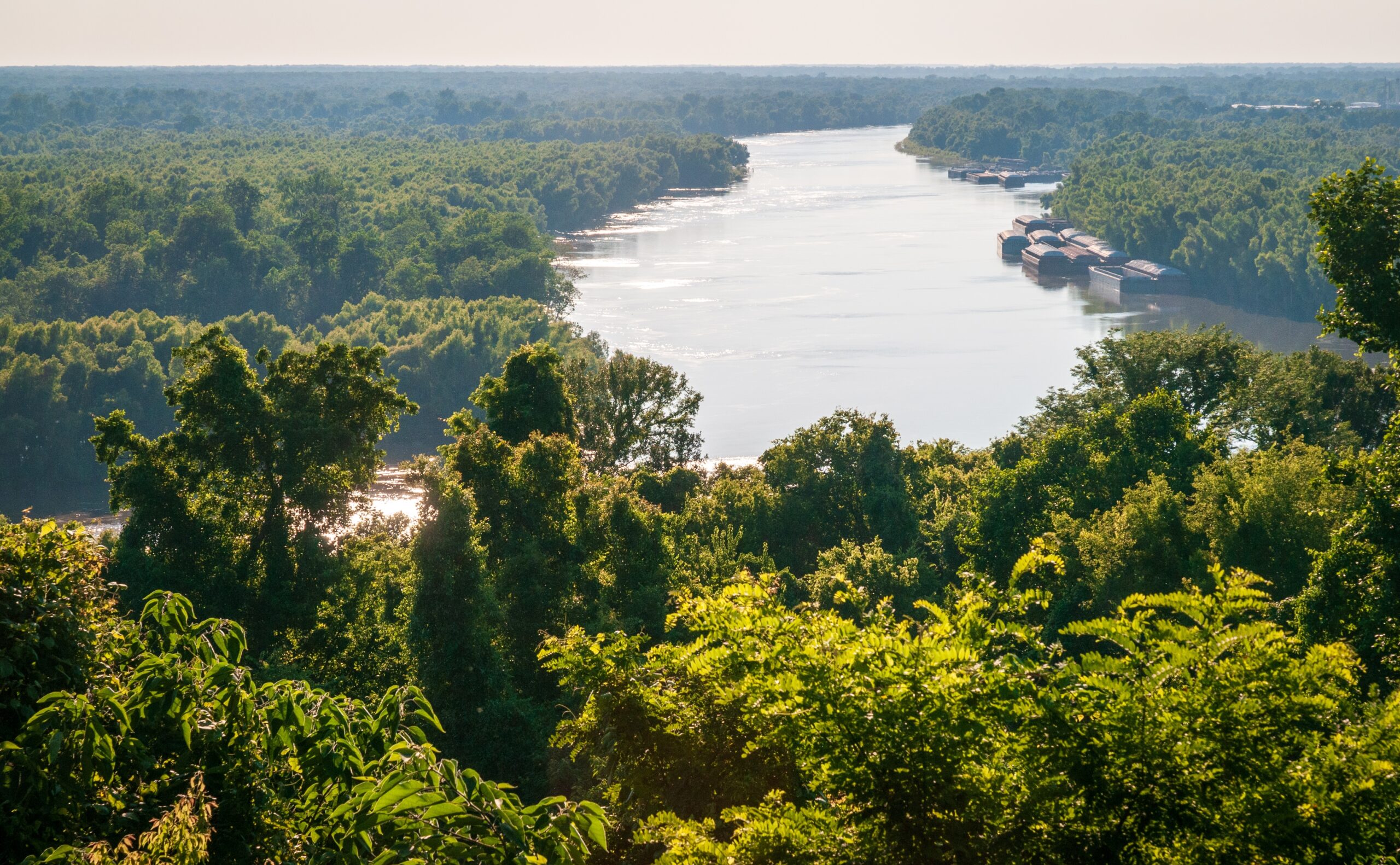
This project includes islands along the Mississippi River – one of the most intact ecosystems in the southern US. Seasonal flooding limits harvest windows but enhances habitat integrity, supporting wildlife and producing robust carbon outcomes.
Timberland has consistently outperformed traditional assets on a risk-adjusted basis
CASE STUDY 2: Stream mitigation bank – Virginia
Issue: Developers with unavoidable stream or wetland impacts must purchase mitigation credits to meet ‘no net loss’ requirements. High-quality restoration sites are scarce, creating a compelling opportunity to unlock natural capital value from suitable timberland acres.
Action: Manulife Investment Management identified 285 acres of streams and wetlands within a 1,958‑acre Virginia property for a stream mitigation bank. In partnership with Resource Environmental Solutions (RES), the team advanced a restoration and long-term monitoring plan. A conservation easement over the site will be sold, enabling credit generation and monetising acreage that previously contributed little to timber income.
Outcomes
• Financial: Converts underproductive land into meaningful value; credits diversify non-timber revenue.
• Strategic: Demonstrates scalable natural capital value creation using <1% of the property footprint.
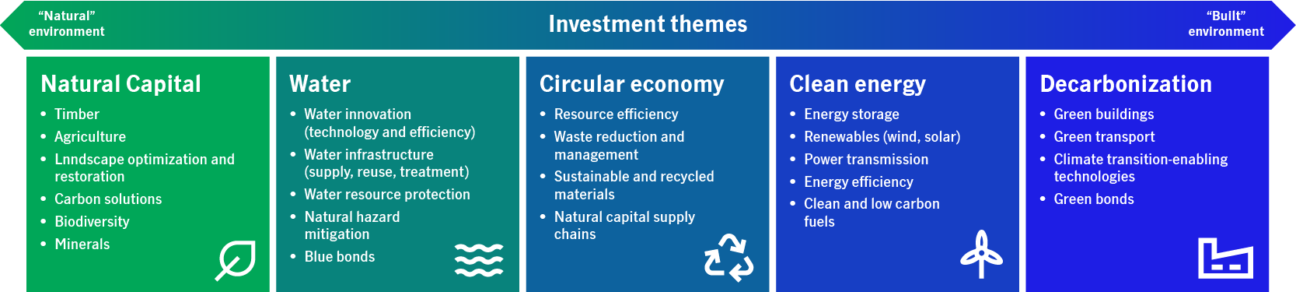
Five themes shaping the future of natural capital investing
As the global economy shifts in response to climate change and biodiversity loss, investors face a complex transition. To navigate this shift, we’ve identified five core investment themes that reflect the scale of opportunities across global capital markets and guide our approach to value creation through carbon-focused forestry, conservation partnerships and renewable energy integration.
Timberland represents a strategic pillar of a forward‑looking investment strategy – delivering solutions to today’s global challenges while creating long‑term resilience.
Creating value through sustainable natural capital management
Timberland has evolved well beyond traditional production to become a strategic platform for both returns and regeneration. As the case studies illustrate, monetising ecosystem services – from carbon or water to habitat – can diversify income, reduce risk and enhance asset durability.
With the scale and operational expertise to execute across global markets, Manulife Investment Management has provided investors with competitive returns and measurable impact, supporting the transition to a nature‑positive economy.
References:
[1] Past performance does not guarantee future results.
[2] Data for US Timberland refer to the NCREIF Timberland Property Index as of 12/31/24. Data for US Commercial Real Estate refer to the NCREIF Property Index as of 12/31/24. Data for Small Cap Stocks refer to the S&P600 Index from Standard & Poor’s Financial Services LLC as of 12/31/24.
[3] Manulife IM as of December 31, 2025. Includes US data only