



By Beverley Gower-Jones, managing partner, Clean Growth Fund
At Clean Growth Fund, our mission is to invest in the technologies that will deliver meaningful carbon reductions – and to do so in a way that makes strong commercial sense. Our first £101 million fund has backed 19 UK companies developing solutions with the potential to transform industries and accelerate the transition to net zero.
With our second fund now in progress – we’ve completed a £49 million first close and have a further £10 million secured – we’re building on that foundation to scale the next generation of climate innovators.
We take a rigorous, bottom-up approach to assessing carbon impact. For every company we consider, we analyse the emissions abatement potential per unit of product or service, calculate the cost per tonne of CO₂ avoided, and model that against sales forecasts over five and ten years. This gives us a clear view of which innovations can deliver the greatest carbon reduction for the lowest cost – a key societal responsibility as well as a commercial imperative. We benchmark this annually to ensure we’re tracking real impact, not theoretical promise.
Take Sunswap, one of our portfolio companies. They are decarbonising the refrigerated trailers used by heavy goods vehicles—an overlooked but significant source of emissions. Traditional diesel-powered trailer units can account for up to half the emissions of a truck, yet they’re not regulated under the Transport Act.
Sunswap’s fully electric solution replaces diesel generators with batteries, solar panels and intelligent control systems. When we first invested, the company had 11 employees and a prototype built into a half-finished trailer. Today, it has a manufacturing base in Leatherhead, over 100 staff, and customers including Ocado, Tesco and DFDS. Their system not only cuts emissions but also lowers operating costs, requiring recharging just once a week. Sunswap has sold its first units in Australia and continues to scale rapidly.
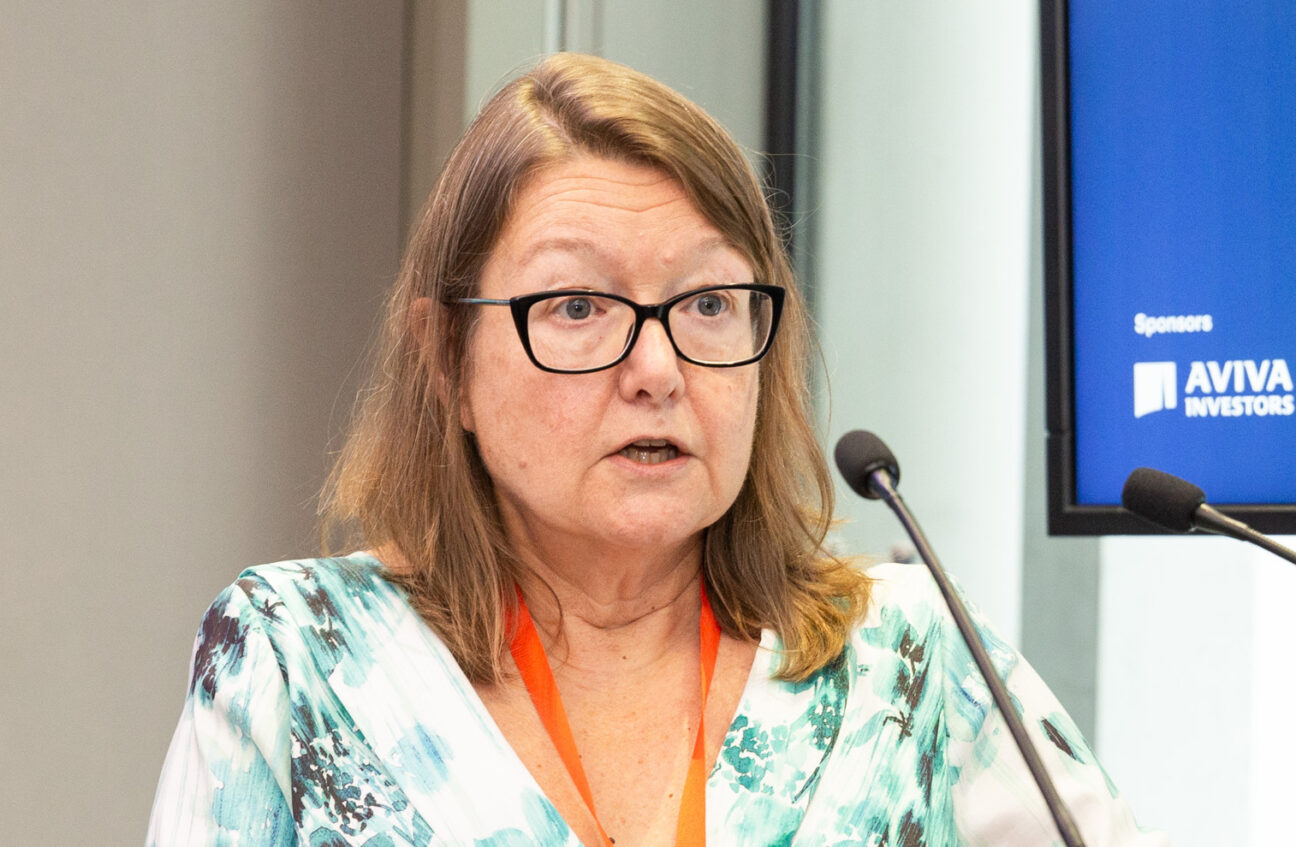
We take a rigorous, bottom-up approach to assessing carbon impact.
Beverley Gower-Jones, Clean Growth Fund
Another portfolio company, Above Surveying, uses drones, sensors and data analytics to monitor solar farms throughout their lifecycle – from construction to maintenance. By detecting faults early, operators can maintain efficiency above 95%, which is critical now that subsidies have ended. Above Surveying has grown more than 40% annually and is approaching profitability, with interest from acquirers as the solar market consolidates.
A very different innovation is Clean Food Group, spun out of the University of Bath. It uses yeast fermentation to create sustainable replacements for palm oil and cocoa butter – two commodities linked to deforestation and volatile supply chains. The company recently acquired a facility in Liverpool and is working with Mondelez to scale production, aiming to remove palm oil from everyday products like biscuits and home care goods.
These examples highlight the diversity and dynamism of UK climate innovation. We source opportunities through deep sector research, regional networks and nationwide roadshows – meeting entrepreneurs from Newcastle to Bristol and Glasgow. By connecting innovators, investors and policymakers, we aim to build regional ecosystems that will power a thriving, low-carbon economy across the UK.