


Lisa Stonestreet talks to PMP about what EIRIS Foundation’s four decades of responsible investment can teach asset owners moving into private markets – from defining what they want to achieve to transparency and stewardship.
The EIRIS Foundation has been working on responsible investment since 1983, helping charities to align their endowments with their missions. Along the way it has taken on many projects, such as creating an ESG ratings business, but has always remained true to its unifying mission of creating a more just and sustainable financial system.
Today, its work ranges from compiling corporate lobbying metrics to assessing human rights standards. It also provides concerned institutional investors with information on companies operating in conflict-affected areas, including Sudan. The foundation is also an asset owner, with a modest allocation to impact investment manager Snowball.

Lisa Stonestreet is head of charity impact and has worked across a wide variety of its programmes. Her work has included helping charities develop investment policies aligned with their missions, research into charity-specific pooled funds and initiatives bringing charity investors together to share their approaches to responsible investment.
Private markets have not traditionally been a particular focus for EIRIS, but Stonestreet says the foundation is increasingly entering into related conversations with asset owners. Here, she discusses how the experience of responsible investment in public markets can teach asset owners as they increasingly explore private-market opportunities
Private companies can offer attractive opportunities – but they also raise questions about transparency, influence and how responsible-investment principles developed in public markets can be applied.
Longview Networks’ Charities, Endowments & Foundations Investment Forum | 10 September 2026 | London
How has responsible investment changed over the decades EIRIS has been working in this area?
Lisa Stonestreet: I think of it as having three phases. The first phase was defined very much by a moral, values-led standpoint. Investors asked themselves, am I complicit in harm? That led to the rise of ethical screening – the traditional screening out of negative investments, or what some might call sin stocks.
Several of the organisations involved in starting EIRIS were faith-based organisations, including the Quakers and the Joseph Rowntree Charitable Trust. They did not want to invest in sectors such as arms mnaufacturing, or in companies operating in apartheid South Africa.
The second phase was a shift towards investors seeking to change corporate behaviour, where existing practices were is harmful or contributing to negative social and environmental impacts. That led to a big rise in engagement and stewardship – thinking about how active owners can engage with companies and the asset managers that invest in them.
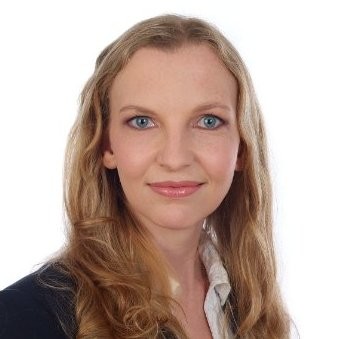
Organisations that are particularly motivated by achieving positive outcomes and impacts need to decide what they want their capital to achieve before deciding where to allocate.
Lisa Stonestreet, ERIS Foundation
Most recently, the third phase has entailed a shift towards asking what outcomes and impacts the system is producing. What rules or disclosure requirements do we need? Where does power lie? Where is there stakeholder input?
That doesn’t mean the previous approaches have fallen away, but there has been a reframing of what is financially material. People have become more aware of the impact of environmental and social factors on portfolio risk. There can be a tension between looking at these issues from a financial-materiality perspective and looking at them from a values-based perspective. We argue that it isn’t one or the other – you need to gain the full picture.
Should charities maximise returns and use the proceeds to pursue their mission – or should the investments themselves contribute towards that mission?
Stonestreet: Increasingly, a lot of foundations – particularly pioneering ones such as Friends Provident Foundation, Barrow Cadbury Trust and Esmée Fairbairn Foundation – see their endowment and investments as another tool for achieving their mission.
Maximising income to maximise grant-giving is one element, but that can ignore structural and system-level problems. There is increasingly a feeling that it doesn’t make sense to maximise grant-giving to mitigate the problems you’re trying to solve, when your investments might be perpetuating those problems.
The classic example is a charity involved in cancer support investing in tobacco – that now seems ridiculous. But we’ve also seen environmental charities investing in fossil-fuel companies and organisations focused on social inequality investing in companies without good employee policies.
One positive shift is the move away from the binary thinking – of either maximising returns or applying a responsible-investment lens. There are ways of investing where you can be just as mindful of returns alongside other concerns. At EIRIS, we want to create a system where investing is financially beneficial while providing solutions to social and environmental problems and having a positive effect on society.
Institutional investment Conferences & Summits from Longview Networks
Why are charity investors becoming more interested in private markets?
Stonestreet: We’re seeing organisations with a real desire to bring more impact investments into their portfolios. There are lots of discussions about definitions, but we would regard an impact investment as one where there is an intentional, built-in social or environmental benefits that can then be measured and reported.
Some of those opportunities are coming from privately-owned companies, and we’re seeing real interest in them from charity investors.
But there are also a lot of questions. When a company lists, that brings a raft of transparency and disclosure requirements, including around ESG factors, that simply aren’t there to the same extent for private companies.
The opportunities for creating impact are very interesting, as are some of the things happening within private markets. It’s an area EIRIS wants to better understand. But charities need to go into those opportunities with their eyes wide open.
Does the relative lack of disclosure change the way investors should approach stewardship in private markets?
Stonestreet: Investors need to understand where they have the most influence lies. In private markets, this often lies at the entry stage – asking questions at the beginning of the process and through due diligence – rather than assuming there will be the same opportunity to engage after entering into an agreement.
The initial stages of negotiating and signing contracts are therefore the time to scrutinise what is being claimed around ESG metrics and impact.
Many organisations are doing interesting things and have robust processes. Even having one case study of an organisation scrutinising these issues can be a powerful tool for other organisations looking to forge their own path.
Where do you see the biggest information gaps in private markets?
Stonestreet: We feel that the social data element of ESG is far behind the environmental data in public equities – and that’s even more the case in private markets.
There are some very interesting questions around job quality, remuneration and ownership structures that aren’t particularly transparent in private companies.
Lobbying is another interesting area for us. Trade associations and companies, whether private or public, can influence legislation that ultimately has a huge impact on social and environmental outcomes. Is lobbying activity something that is being disclosed transparently when investors enter a private-market opportunity? I would suggest there’s a gap in what is currently being asked.
There are initiatives such as the EDCI, a global private markets initiative seeking to streamline ESG data requirements, which is doing fantastic things. But there is still a transparency gap.
What should an asset owner establish before it starts looking for private market opportunities?
Stonestreet: Organisations that are particularly motivated by achieving positive outcomes and impacts need to decide what they want their capital to achieve before deciding where to allocate.
They need to be very clear in their minds about what they’re trying to achieve before looking for the opportunities. There will obviously be negotiations and there might be some compromise, but establishing a clear idea of what they want their capital to achieve is a very good starting point.
How do you expect responsible investment in private markets to evolve?
Stonestreet: I think we’re going to see an increasing number of organisations interested in impact looking at private markets.
I also think we’re going to see an increase in disclosure requirements for private companies and perhaps some more rigorous stewardship requirements. The new Stewardship Code talks about private companies, although not to a huge degree, and some of the disclosure requirements are voluntary. That could shift towards more mandatory reporting.
Private companies may well be better placed to deliver impact than traditional public equities. I’m hopeful we’ll see like-minded asset owners coming together to take collective action and drive demand for innovative solutions.